
What does a day in the pod look like?
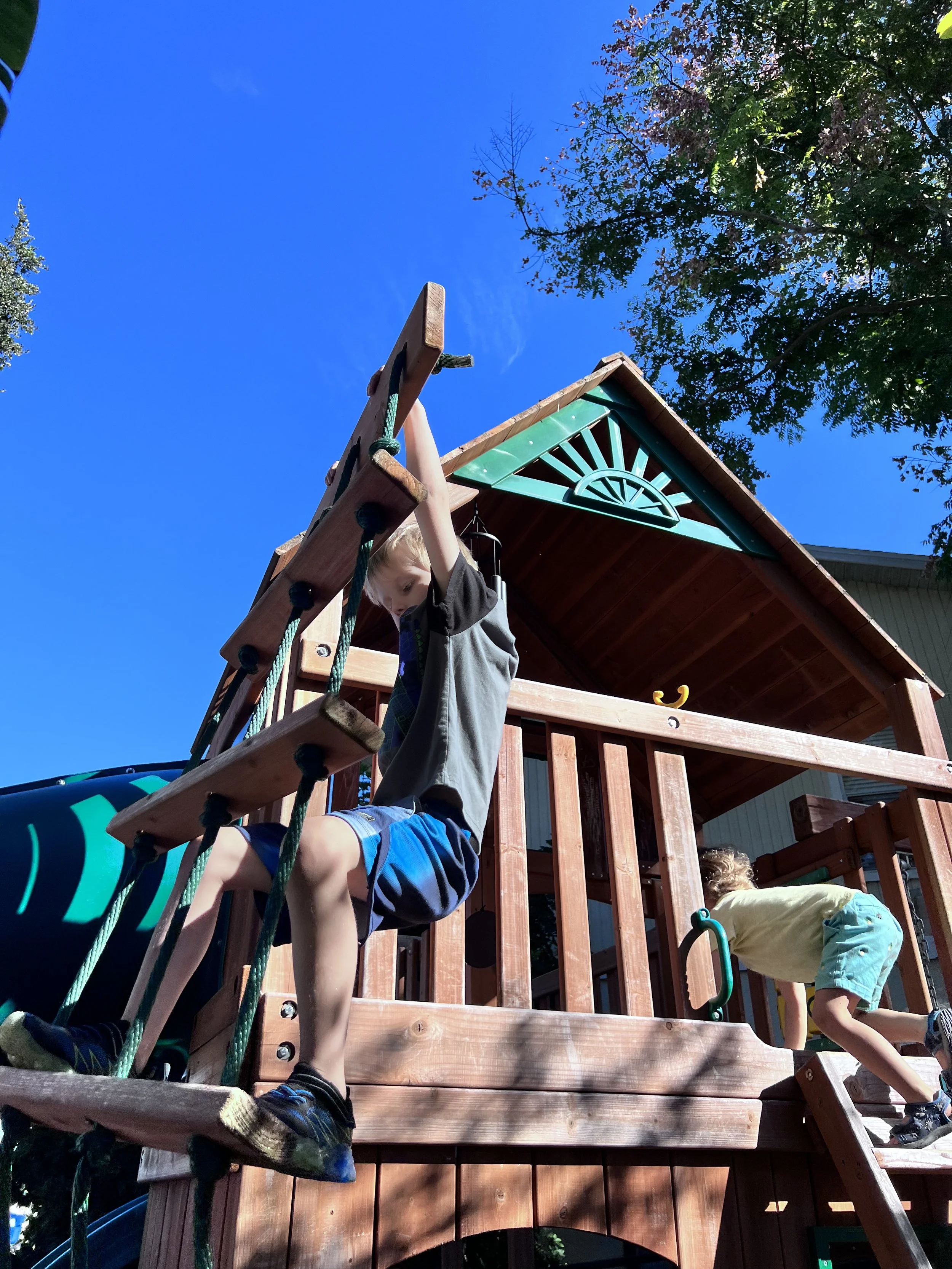
We begin our morning outdoors, letting children move their bodies, socialize, and transition smoothly into the day ahead through unstructured play.
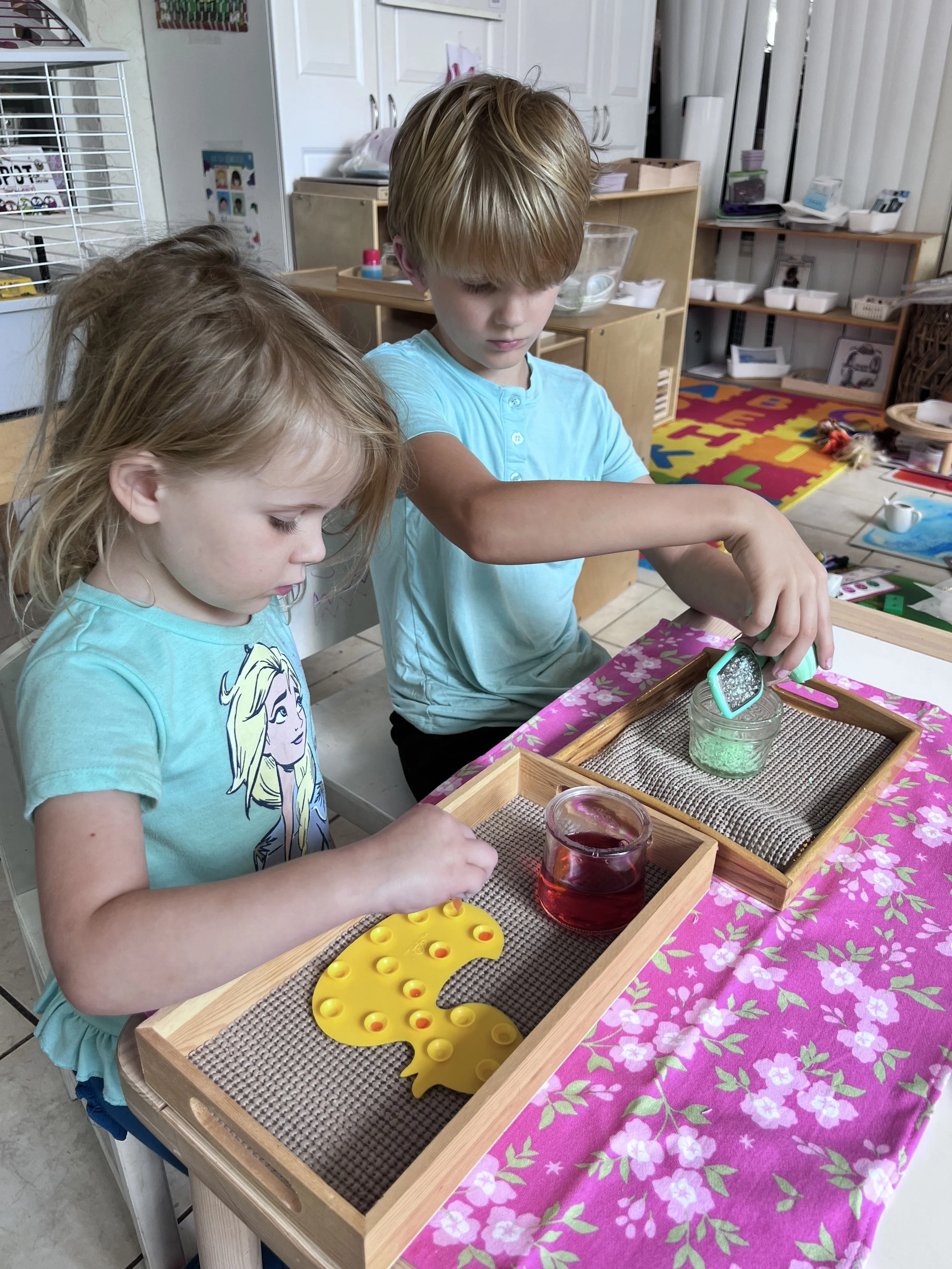
We start in the classroom with a morning circle to sing and greet one another. Afterward, children transition into a dedicated, three-hour work block to explore hands-on materials, follow their interests, and build deep focus.
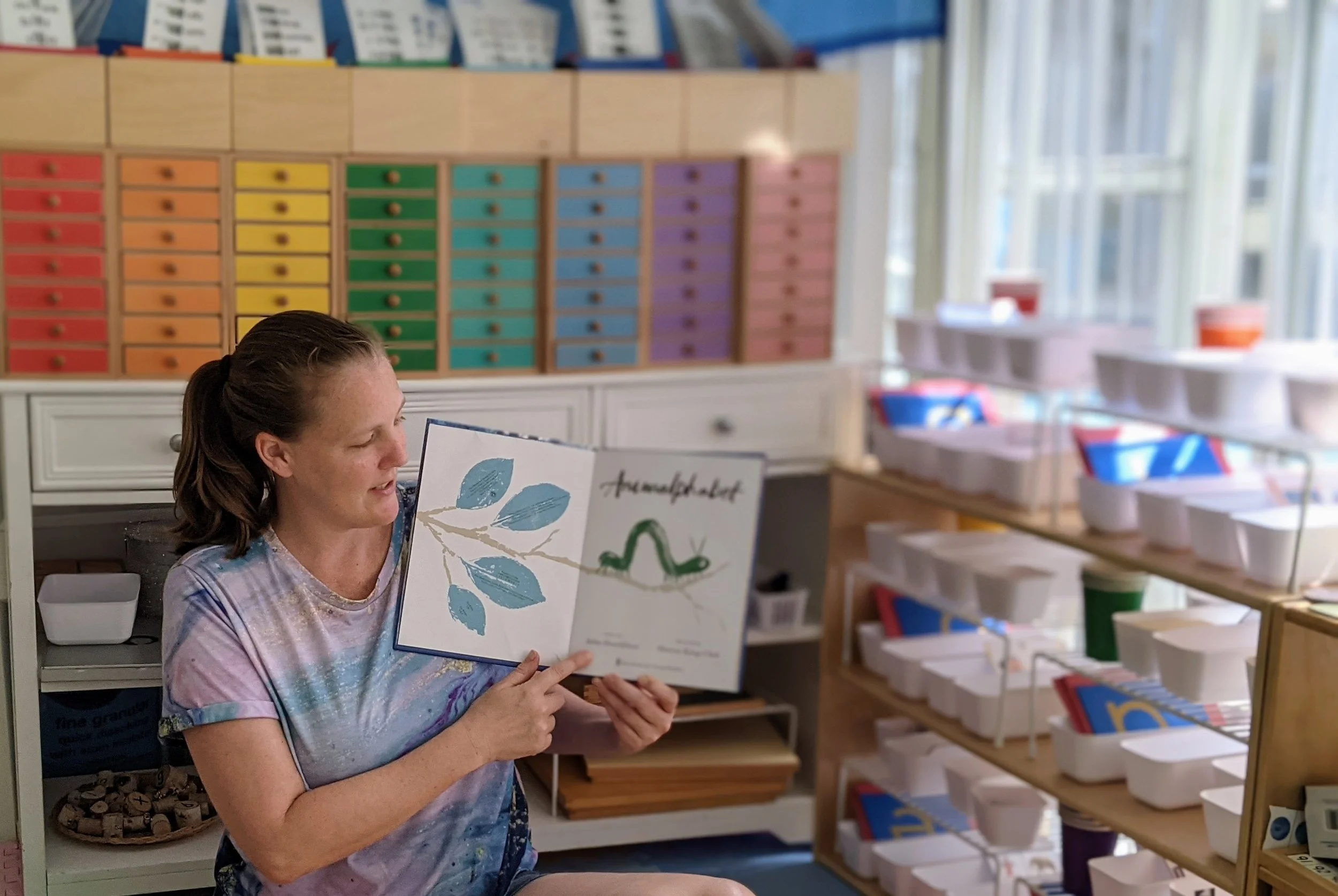
We gather as a group to sing, read, share ideas, and reflect on our discoveries, reinforcing our close-knit community before heading home.
Montessori Curriculum
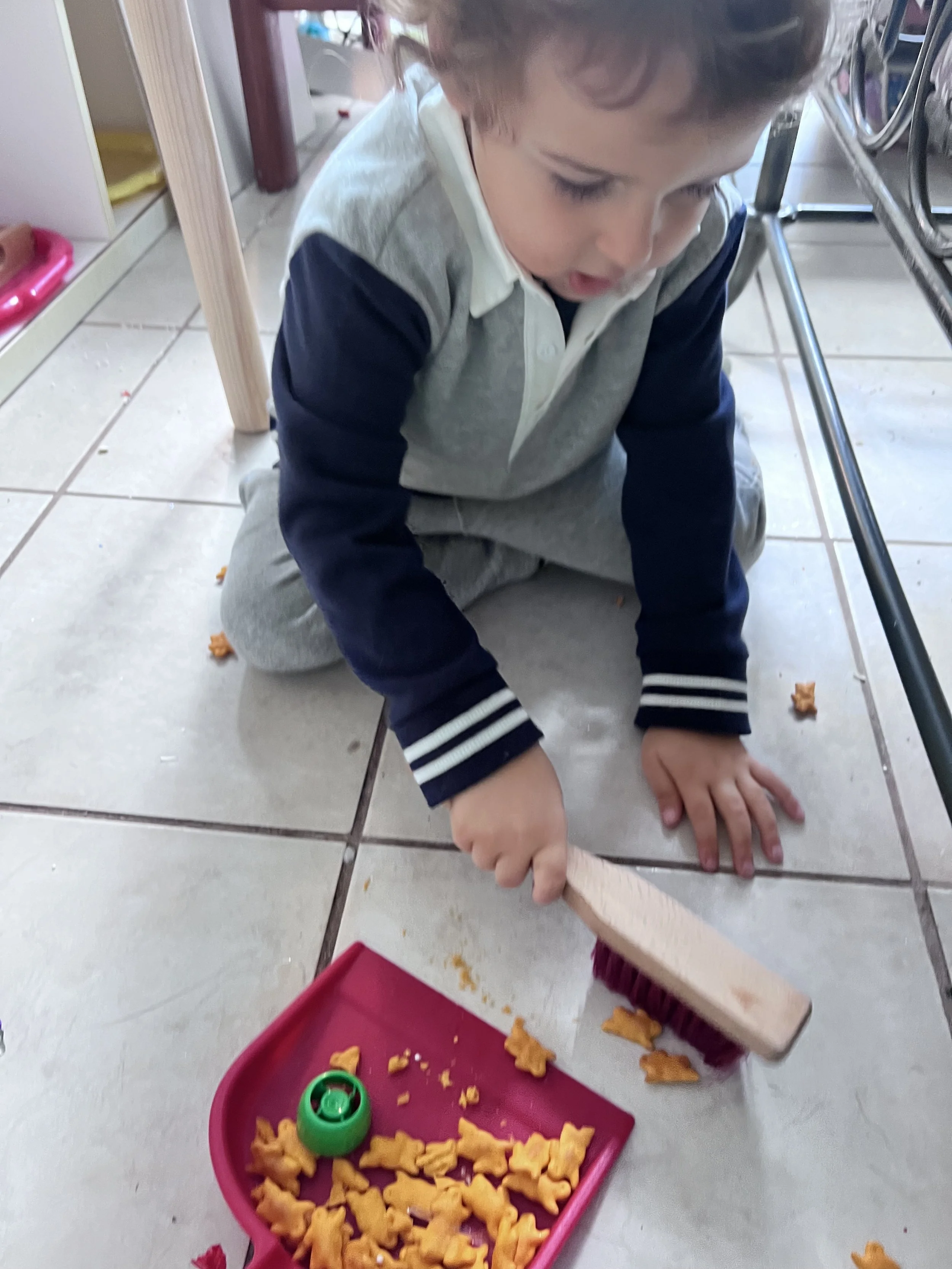
Grace & Courtesy
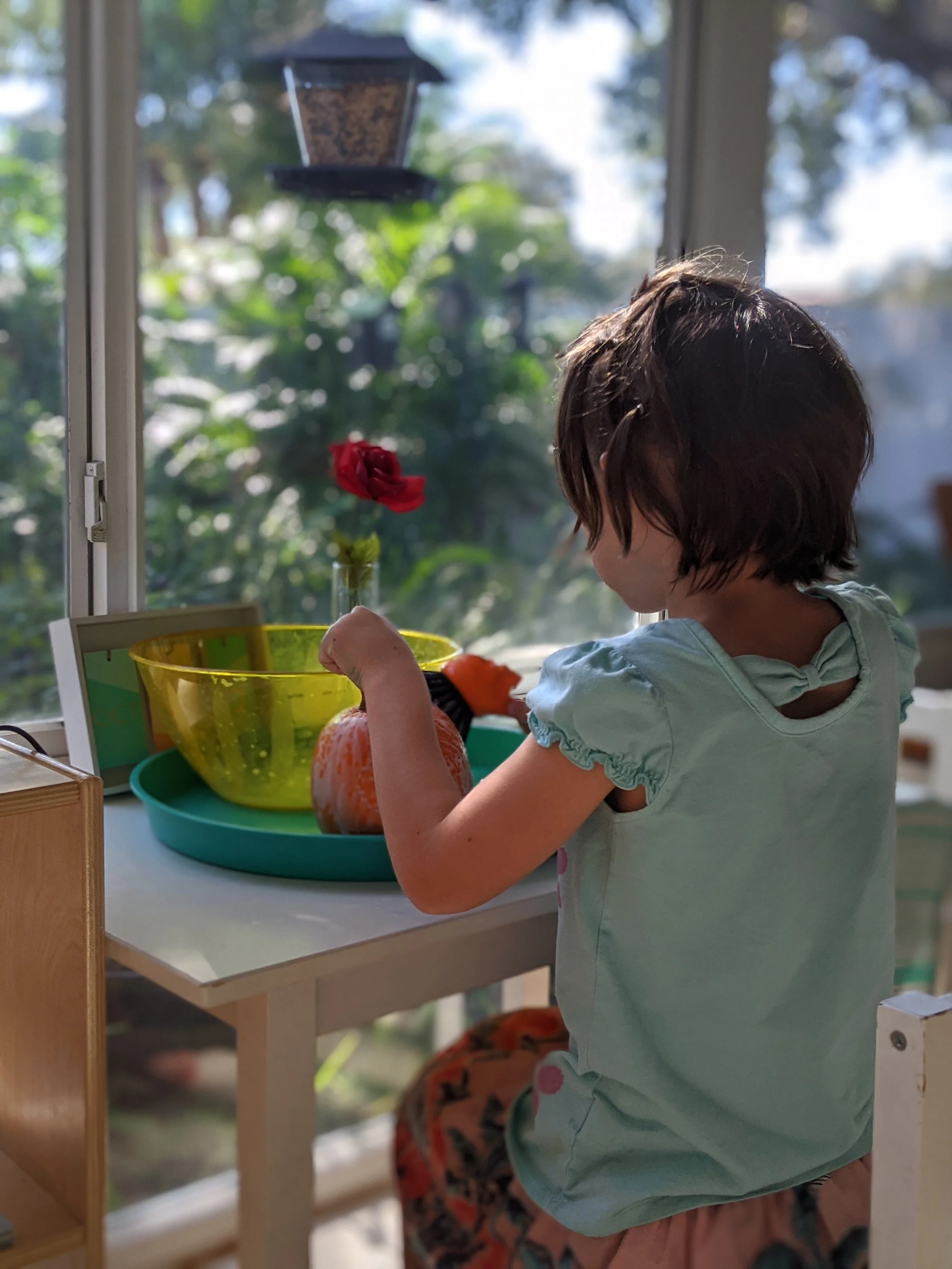
Grace and Courtesy lessons provide the social framework of the Montessori environment, giving children clear, practical tools for living and working harmoniously in a community.
Through role-playing and daily modeling, children learn how to:
Navigate social interactions: Practicing polite greetings, active listening, asking for help, and expressing gratitude.
Resolve conflicts peacefully: Using direct, kind communication to express boundaries and understand others' perspectives.
Respect the community: Learning to wait their turn, move mindfully through the shared space, and offer help to peers.
Cultivate empathy: Fostering genuine care, self-regulation, and mutual respect within the classroom.
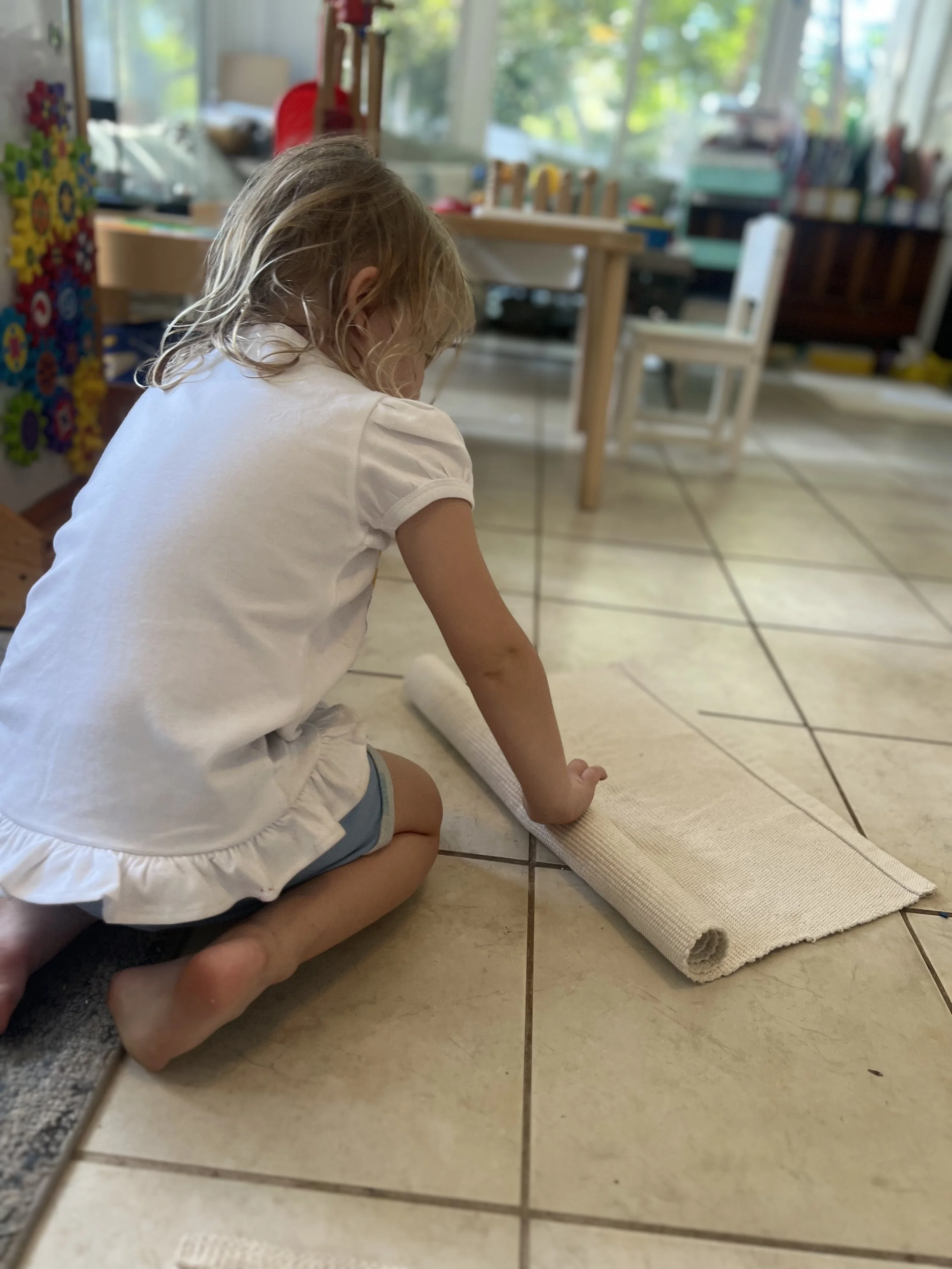
Practical Life
The primary goals of Practical Life are Order, Concentration, Coordination, and Independence.
Through purposeful everyday activities such as pouring, scooping, cutting, sweeping, and washing tables, children:
Develop fine and gross motor control: Strengthening hand and finger muscles to prepare for handwriting.
Build sustained concentration: Learning to follow multi-step processes from start to finish.
Cultivate a sense of order: Practicing care of the self, care of the environment, and respect for their shared classroom community.
Gain self-confidence: Fostering true independence through meaningful, real-world mastery.
Mathematics
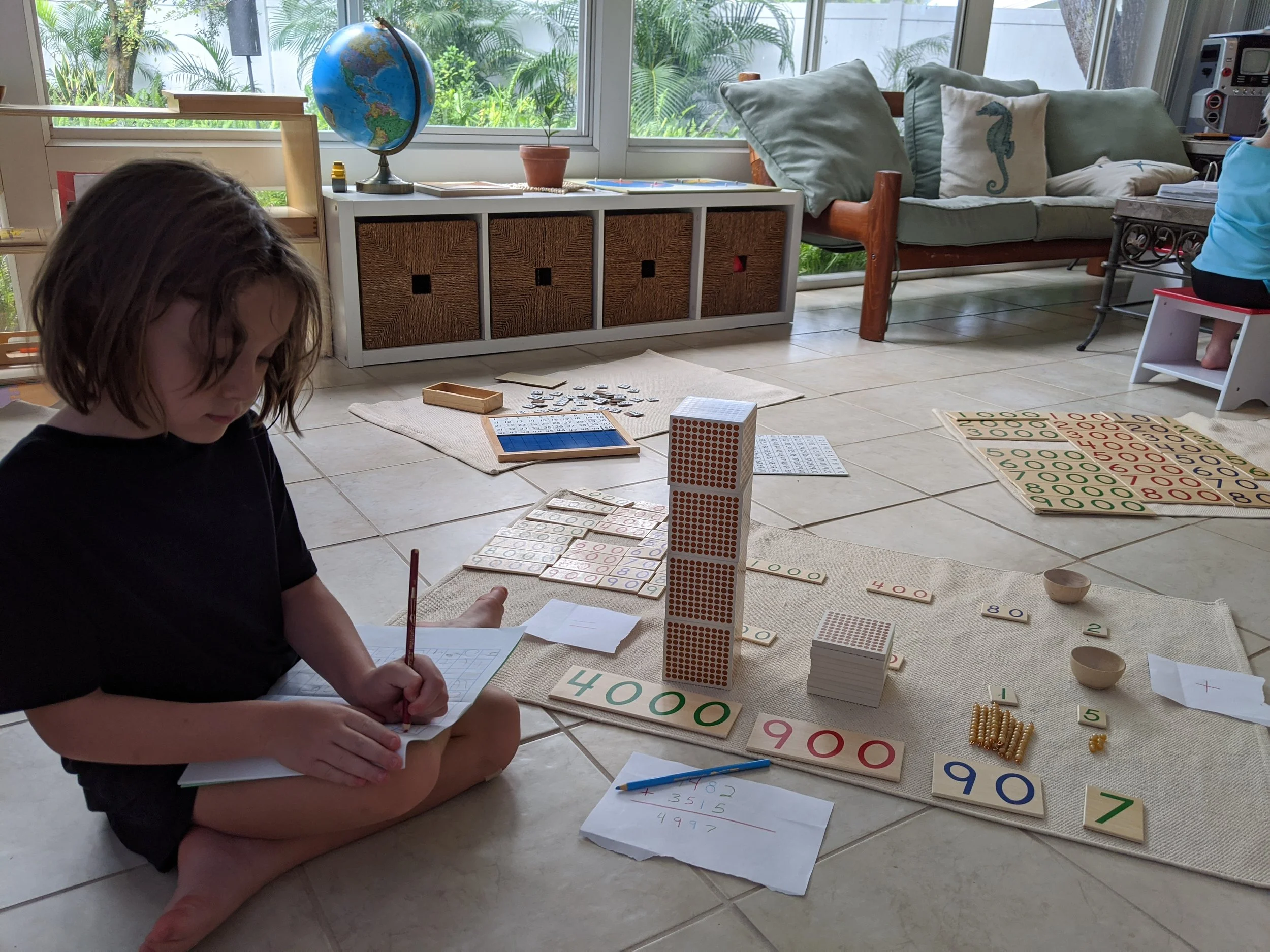
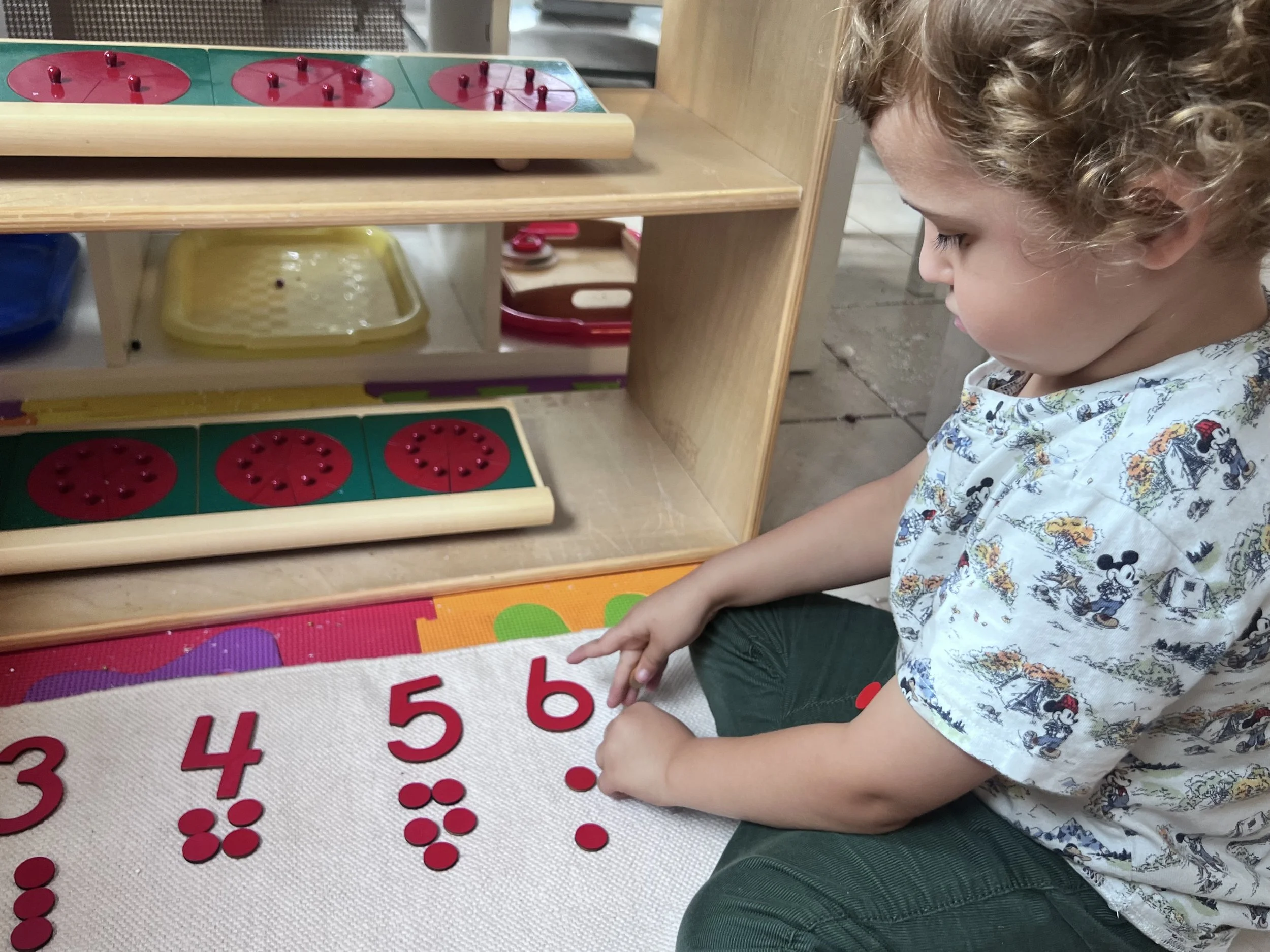
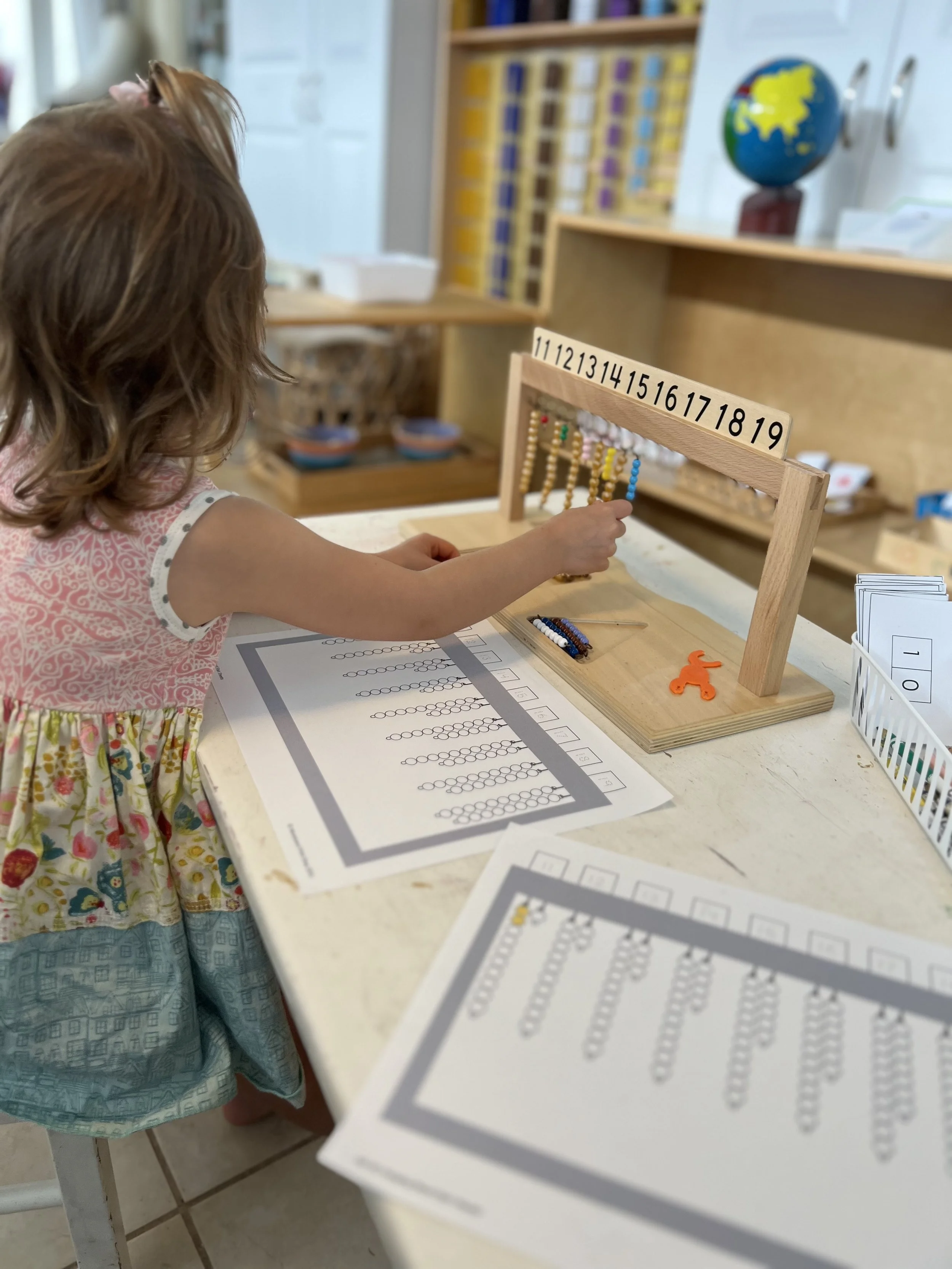
Montessori math begins with beautifully crafted concrete materials, allowing children to physically hold quantities before connecting them to abstract numeric symbols.
As children progress through the curriculum, they move seamlessly from tangible objects to abstract problem-solving:
Establish concrete numerical foundations: Working with Number Rods and Sandpaper Numerals to pair physical quantity directly with written numerals.
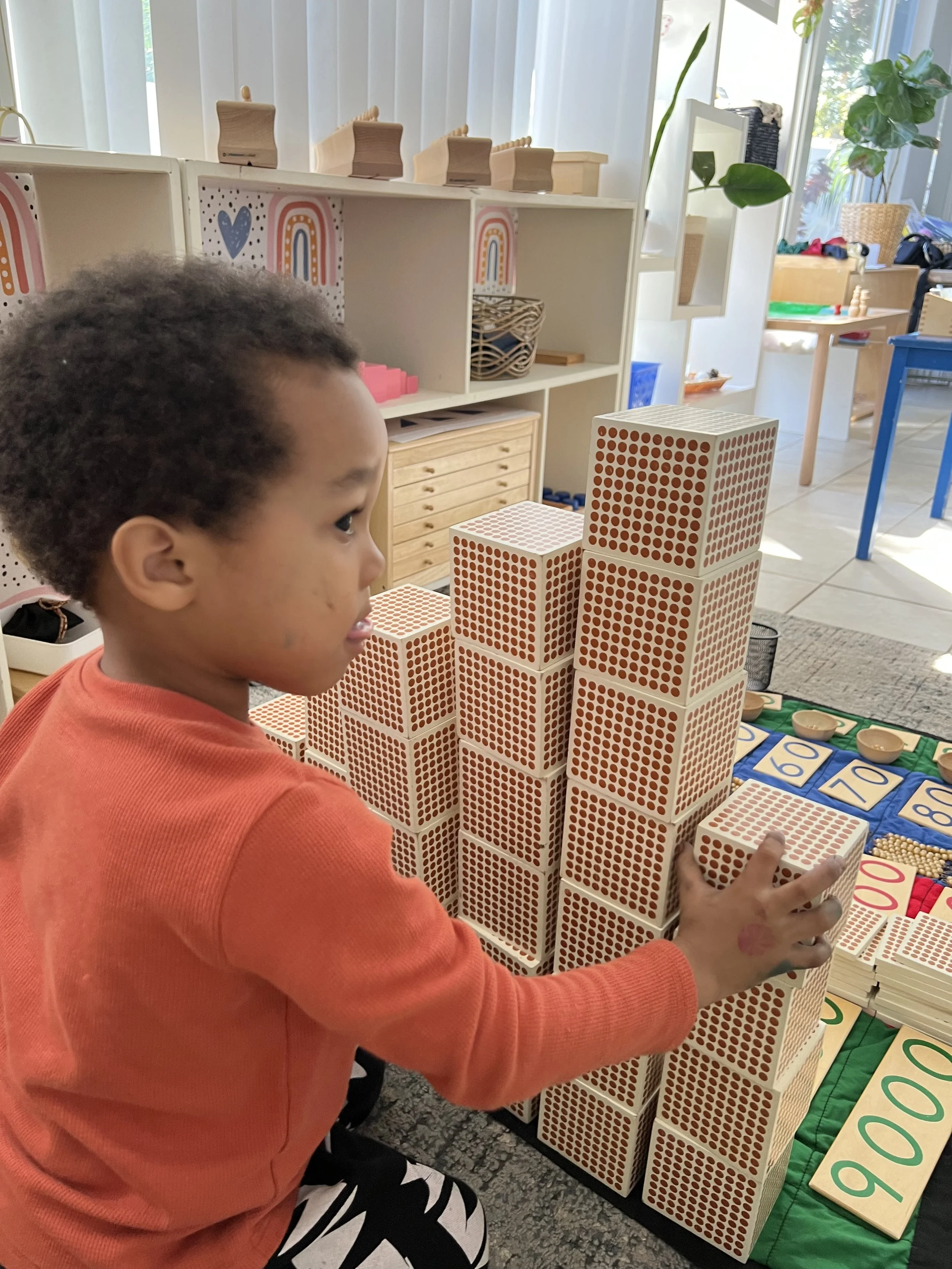
Master the decimal system: Using the Golden Beads to hold a single unit, a ten bar, a hundred square, and a heavy thousand cube.
Perform four-digit operations: Confidently executing dynamic addition, subtraction, multiplication, and division into the thousands using concrete manipulative tools.
Focus on conceptual vs. rote:
Cultivate deep conceptual understanding: Experiencing the physical "why" behind mathematical operations so problem-solving is rooted in true understanding rather than memorized steps.
Math
Sensorial
.
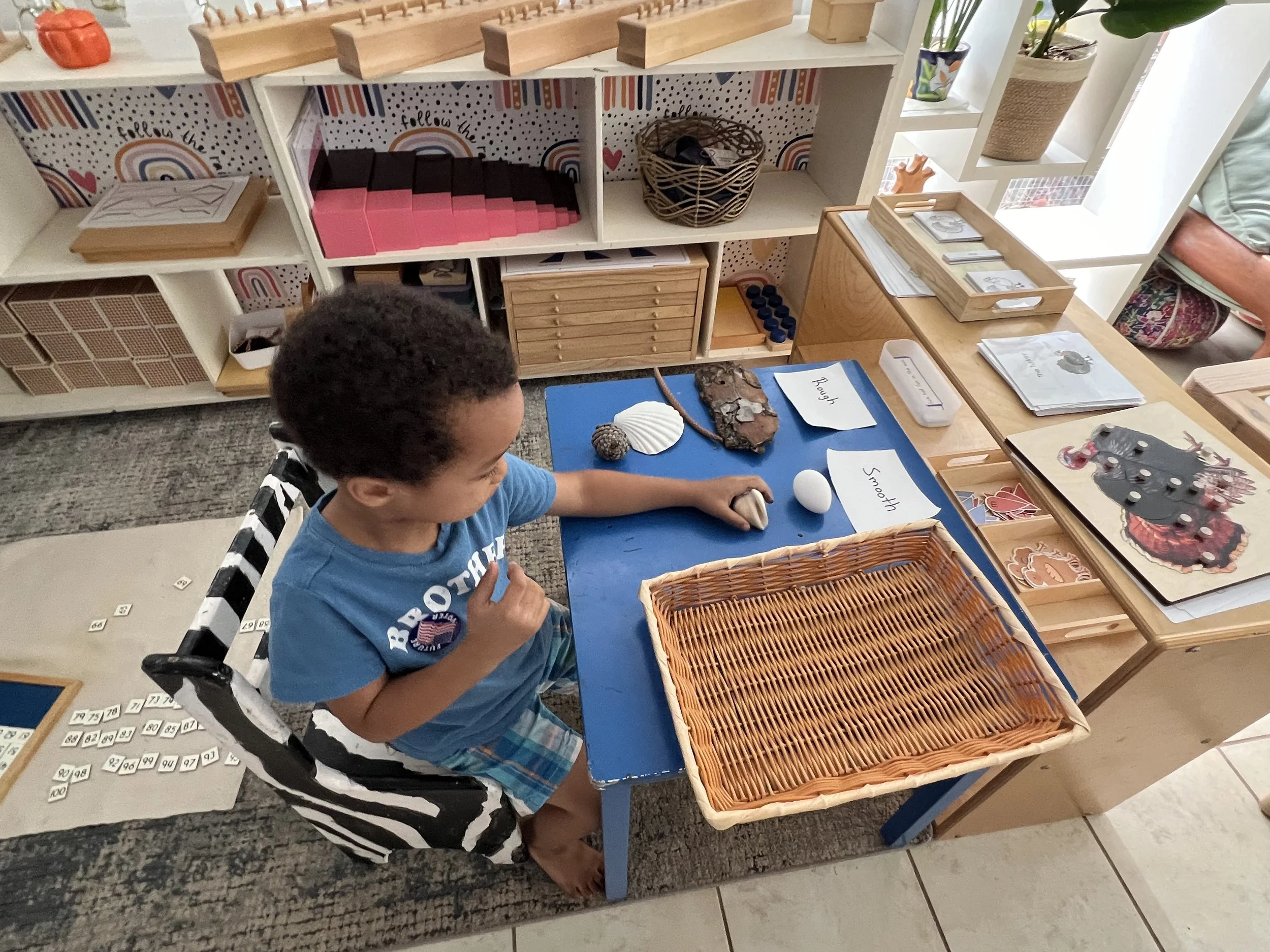
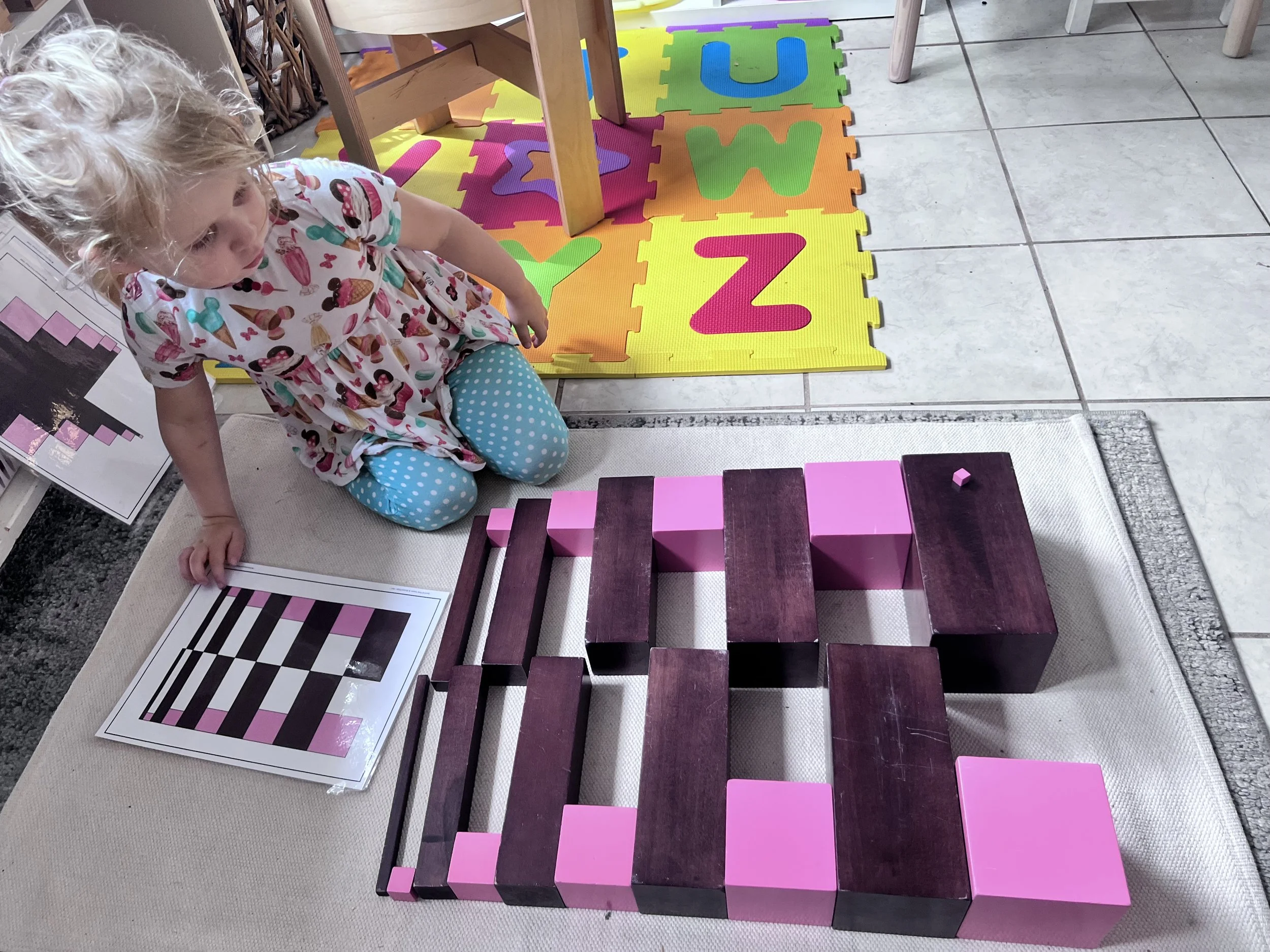
The Sensorial materials enable children to order, classify, and refine their physical perceptions of the world. Each scientifically designed material isolates a single physical property such as dimension, color, weight, texture, sound, or scent.
Through hands-on manipulation of materials like the Pink Tower, Brown Stair, and Color Tablets, children:
Refine sensory discrimination: Learning to discern subtle differences in size, gradation, pitch, and texture.
Develop spatial reasoning: Building visual-spatial awareness and motor control through geometry and dimensional exploration.
Internalize mathematical concepts: Unconsciously absorbing algebraic and geometric relationships (such as base-ten scale and volume) long before encountering them in formal lessons.
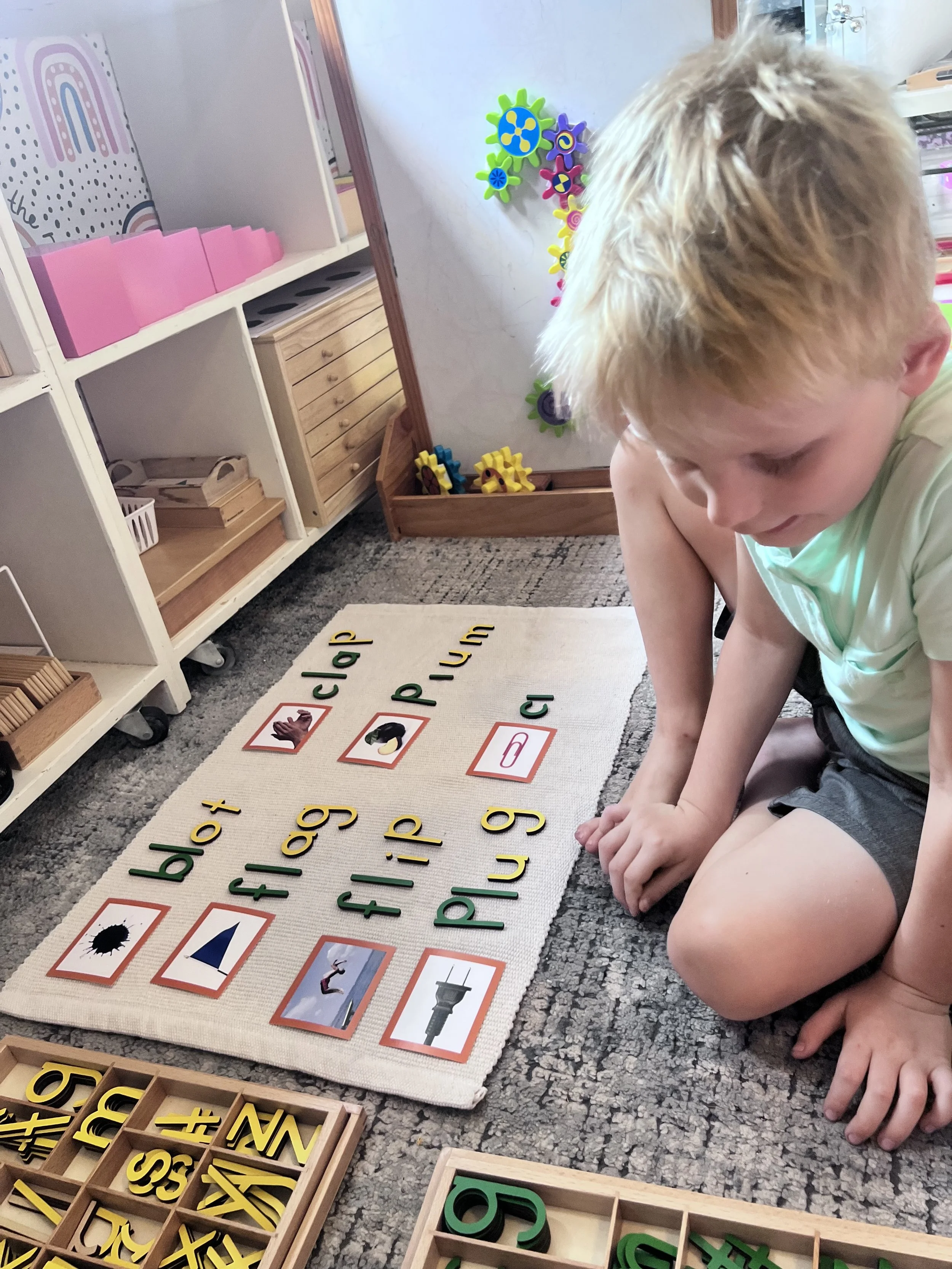
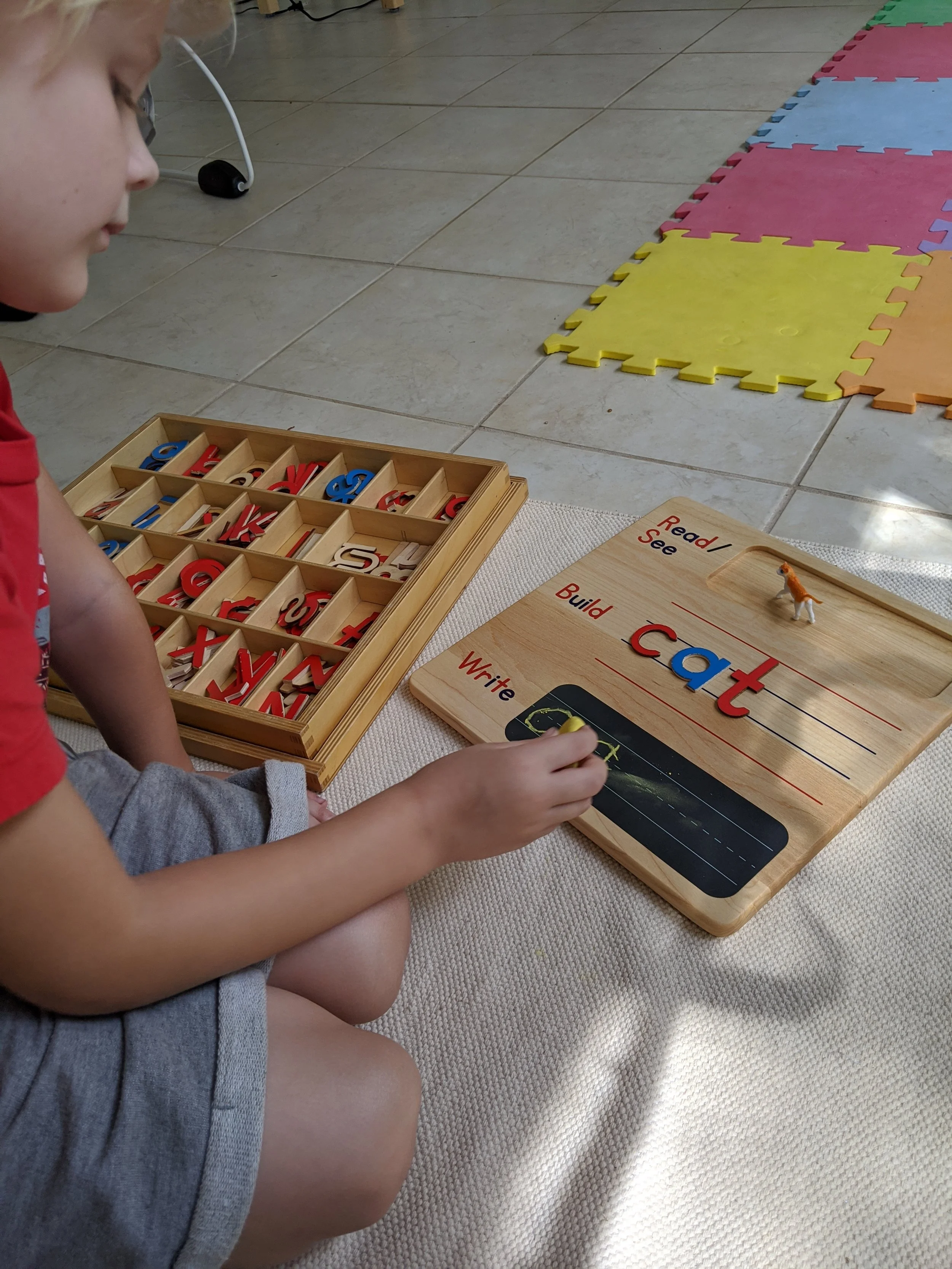
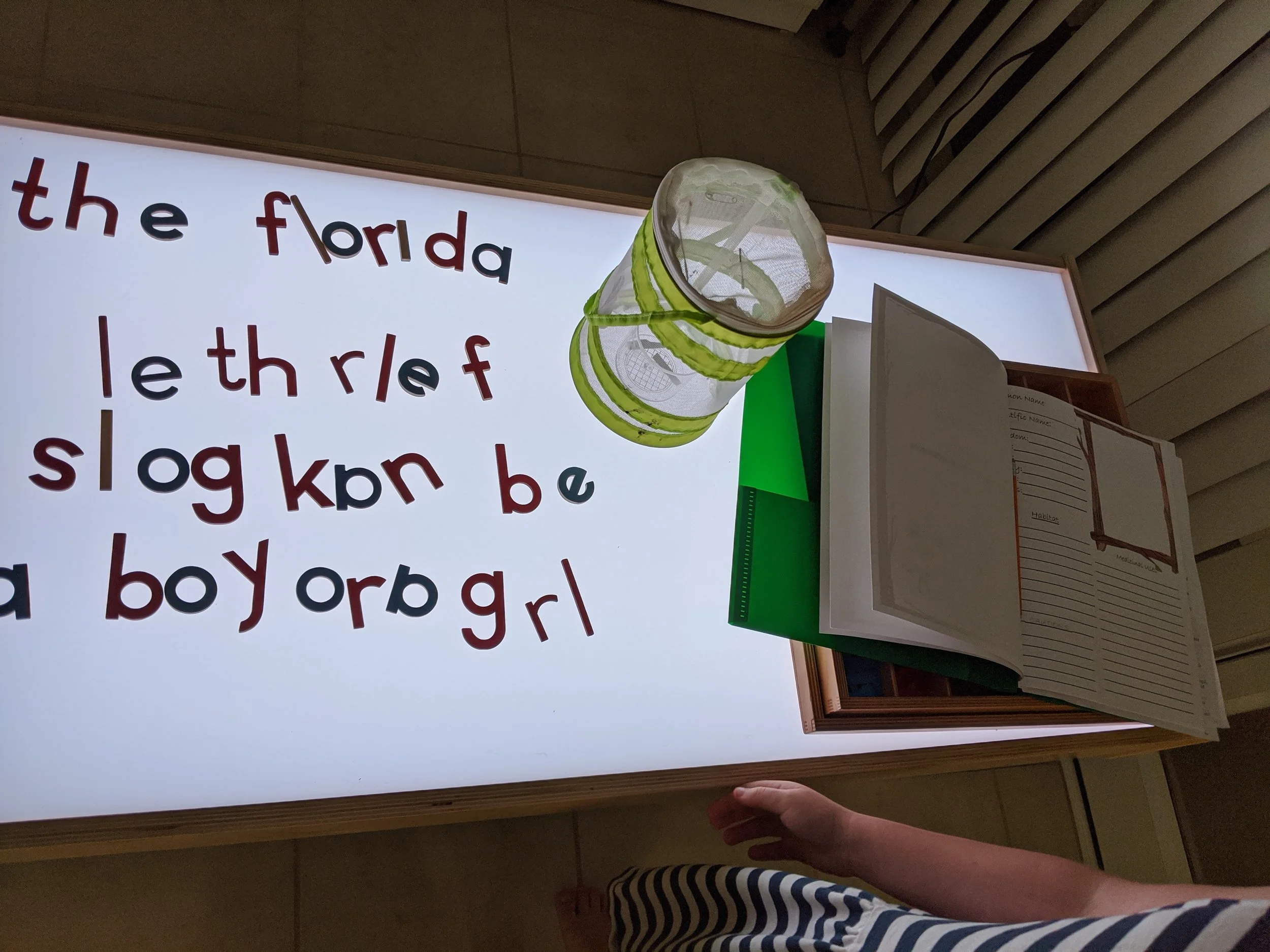
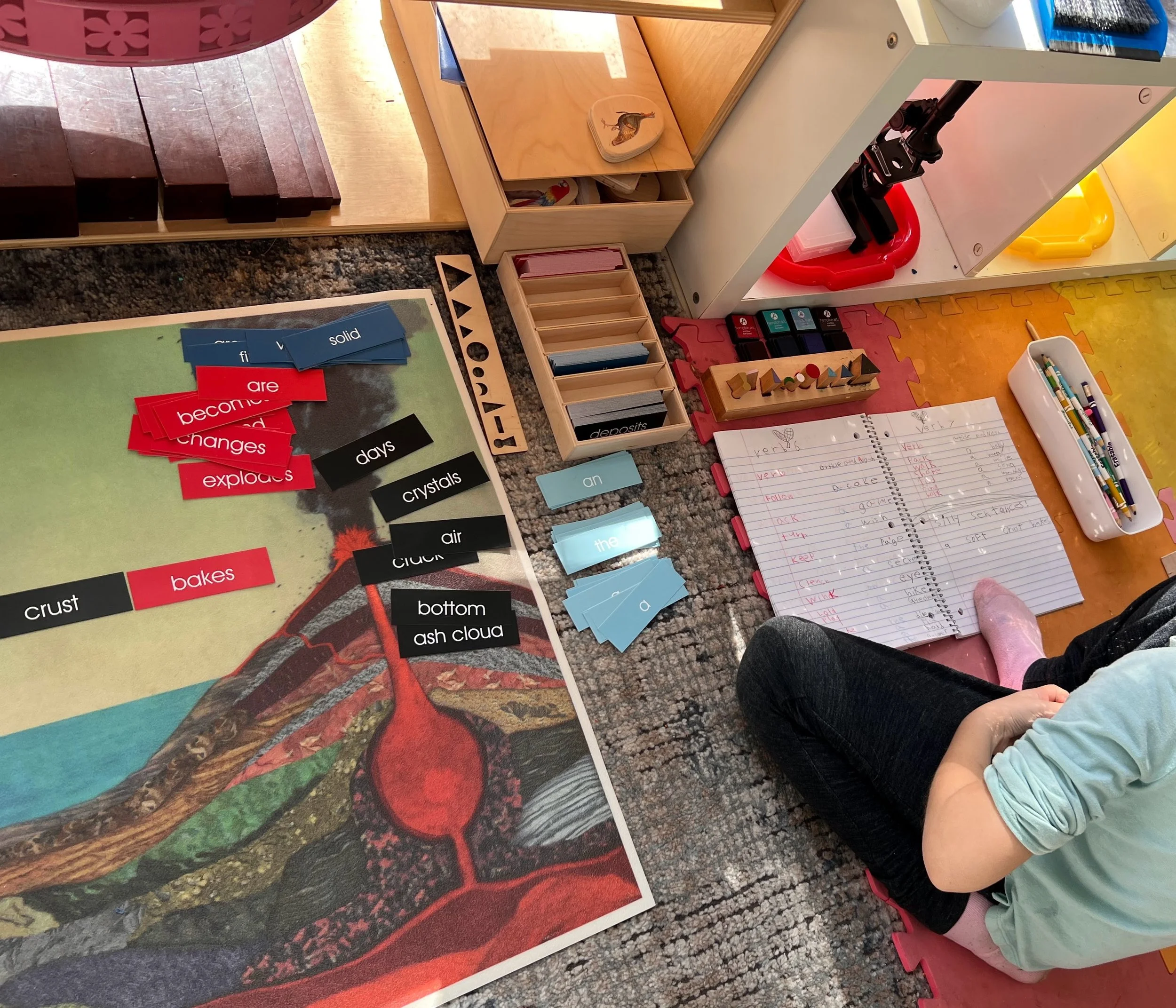
Language development is woven directly into every corner of the Montessori classroom, immersing children in a rich, print-aware environment from day one.
Through phonetic preparation, rich oral vocabulary, and purposeful environmental print, children:
Build rich vocabularies: Exploring classified nomenclature sets and three-part cards across biology, geography, and literature.
Connect sounds to symbols: Tracing Sandpaper Letters to build multi-sensory muscle memory for phonetic sounds.
Compose before writing: Using the Movable Alphabet to express thoughts, construct words, and write sentences prior to pencil-and-paper writing mastery.
Engage with environmental print: Interacting with labeled classroom objects and reading materials designed to inspire natural reading fluency.
Language
Science & Culture
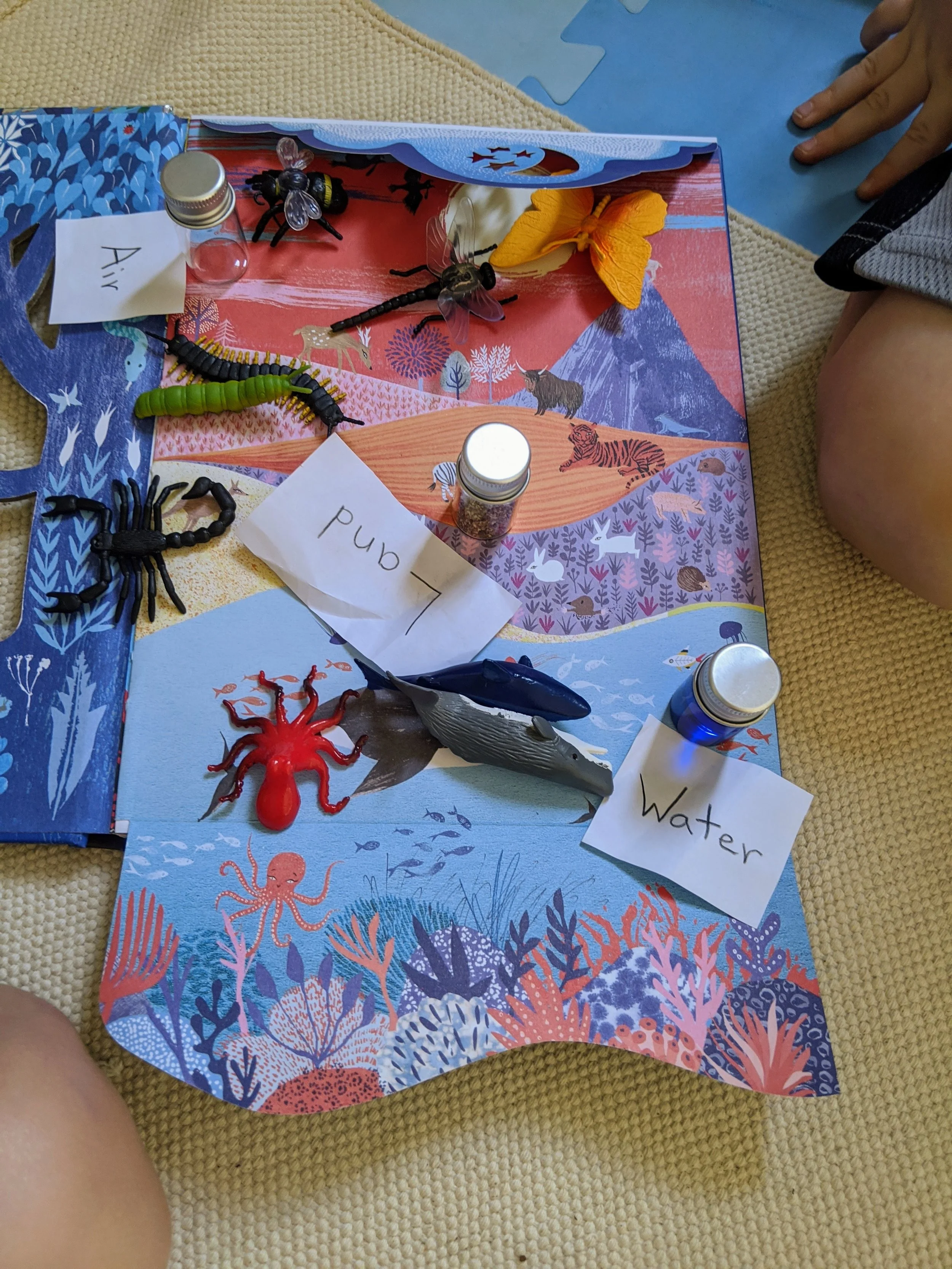
The Cultural area introduces children to biology, geography, physical science, history, and astronomy, igniting their natural curiosity about the universe and fostering global stewardship.
Hands-on materials bring real-world scientific principles to life:
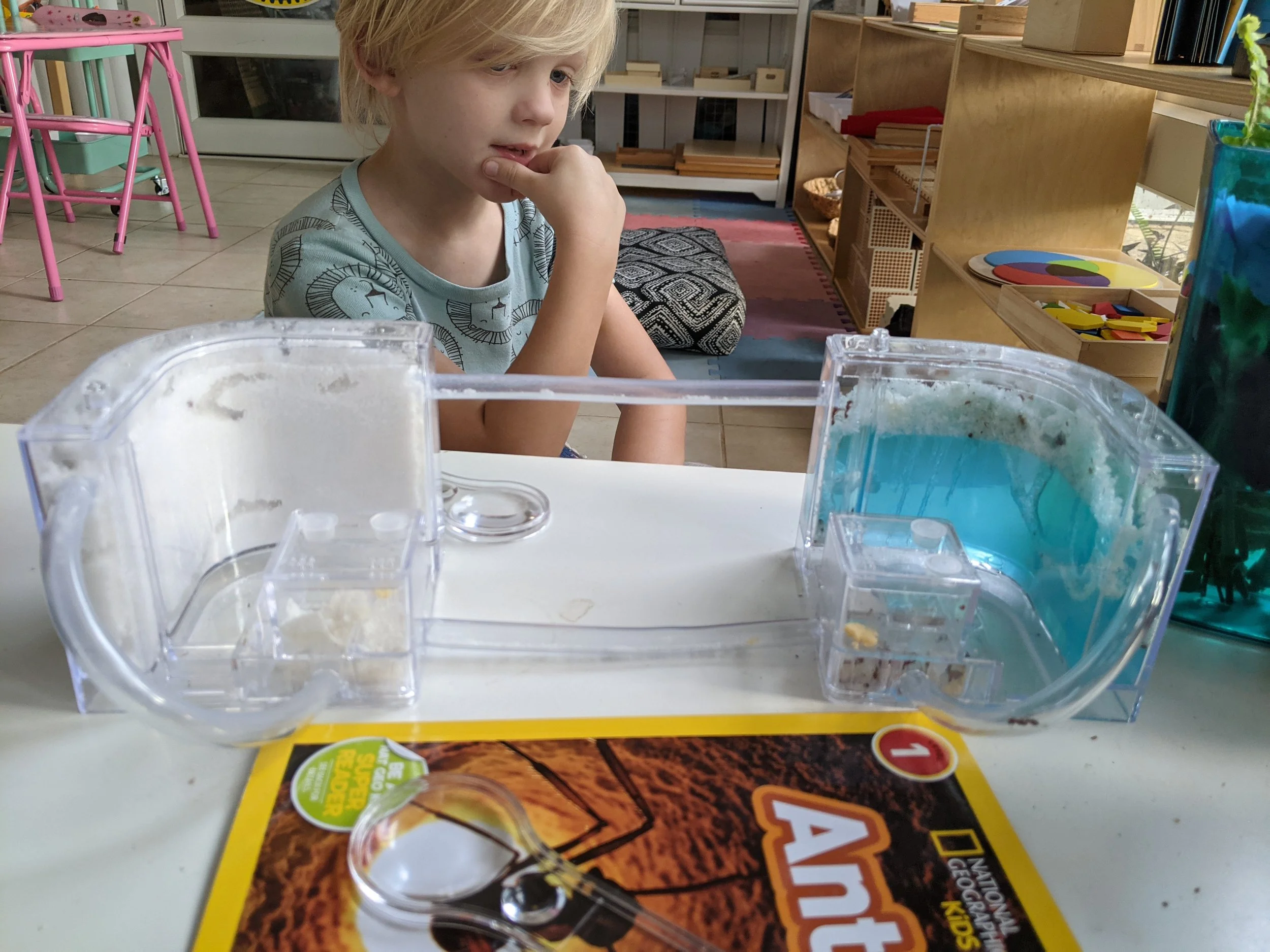
Botany and zoology exploration: Dissecting the anatomical parts of animals and plants using puzzle maps, 3-part nomenclature cards, and real specimens.
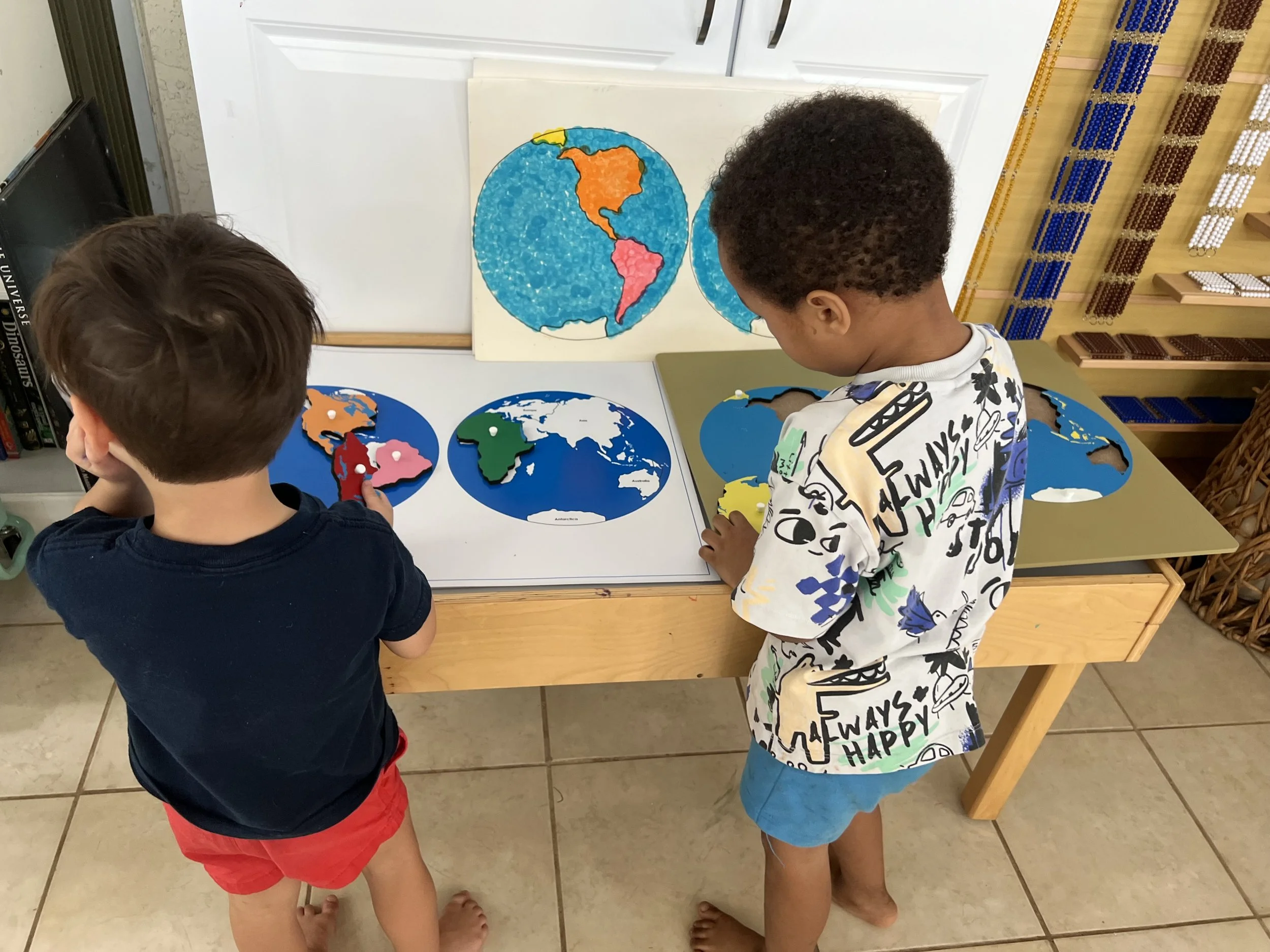
Geography and cosmic awareness: Navigating globe maps, continent puzzle maps, and landforms to understand ecosystems, Earth systems, and the solar system.
Cultural appreciation: Learning about diverse traditions, languages, and habitats to cultivate deep respect for all people and living things.